Introduction: The Growing Role of AI in Modern Warfare and Politics
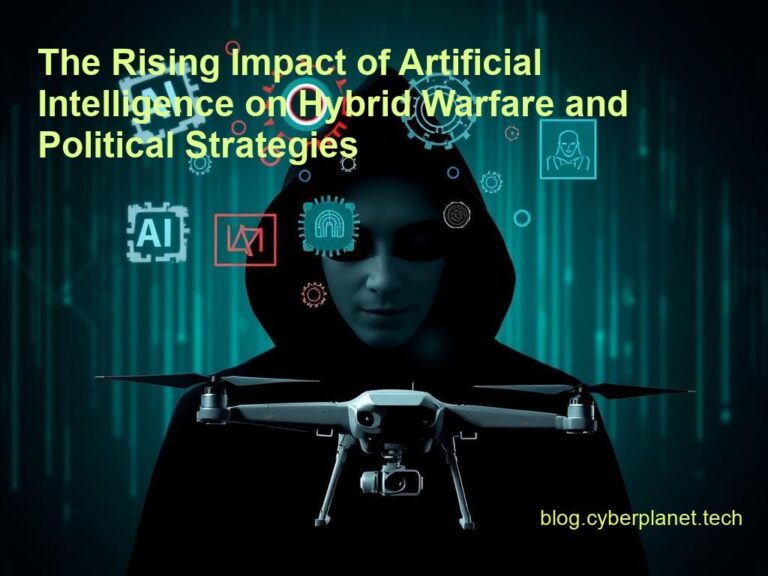
In recent years, artificial intelligence (AI) has evolved from a promising technological breakthrough to a critical tool in redefining the strategic contours of warfare and political maneuvering. As nations and non-state actors embrace AI innovations, the landscape of hybrid warfare—a blend of conventional tactics, cyber operations, and information warfare—is undergoing dramatic change. Modern political campaigns are also increasingly susceptible to AI’s influence, with digital platforms serving as conduits for both legitimate messaging and stealthy, deceptive campaigns.
Across the globe, governments are incorporating AI into their military doctrines and political strategies to maintain competitive advantage. This transition brings about opportunities for enhanced operational efficiency and targeted messaging, but it also introduces challenges such as ethical dilemmas, potential for escalation, and difficulties in regulation. In this era of rapid technological change, understanding AI’s role in modern warfare is crucial for crafting effective countermeasures and ensuring robust governance frameworks.
AI-Driven Disinformation Campaigns
AI-driven disinformation has emerged as one of the most insidious tools in modern hybrid warfare. State-sponsored actors and other malicious entities are leveraging machine learning algorithms and sophisticated content generation tools to create highly realistic deepfakes, synthetic media, and misleading narratives. The Russian approach to disinformation, for example, involves using AI-generated content to create deceptive materials designed to undermine trust in public institutions and alter perceptions during elections ([How to Rein in Russia’s Evolving Disinformation Machine](https://time.com/7095506/russia-disinformation-us-election-essay/?utm_source=openai)). Similarly, China employs a cognitive warfare strategy grounded in AI tailored algorithms to manipulate public sentiment and sway political decision-making ([AI White Paper: The Impact of Information Warfare and AI Manipulation — Taurus Consulting](https://www.taurus.consulting/case-studies/ai-white-paper-the-impact-of-information-warfare-and-ai-manipulation?utm_source=openai)).
The power of AI extends beyond merely fabricating images and videos; it also optimizes the distribution of disinformation, ensuring that tailored messages reach specific audience segments at the right moment. This targeted approach not only shapes public opinion but also complicates the attribution of responsibility, making it challenging to counter or legally pursue perpetrators. With AI’s ability to rapidly generate convincingly authentic content, the risk of eroding trust in both media and political institutions grows exponentially.
AI in Cyber Warfare
The rapid evolution of AI is revolutionizing the realm of cyber warfare. Cyber attackers are increasingly harnessing AI systems to design and deploy malicious software and execute rapid attacks against critical infrastructure. These AI-aided operations can quickly adapt to defensive measures, posing a formidable challenge to cybersecurity professionals who must constantly innovate to stay ahead. For instance, advanced algorithms are now capable of identifying vulnerabilities and learning from previous intrusions, enabling threat actors to launch more precise and devastating attacks ([Criminals use AI in ‘proxy’ attacks for hostile powers, warns Europol](https://www.ft.com/content/755593c8-8614-4953-a4b2-09a0d2794684?utm_source=openai)).
AI enhances the speed and efficacy of cyber attacks by automating aspects of threat detection and exploitation. This means that traditional cyber defenses are often outpaced by the adaptive capabilities of AI-driven malware and intrusion techniques. In response, cybersecurity strategies are also leveraging AI for defensive purposes—utilizing machine learning to detect anomalies, automate responses, and predict potential attack vectors. However, this ongoing arms race in cyber operations underscores the critical need for international collaboration and robust regulatory frameworks to manage the dual-use nature of AI in this domain.
AI in Military Operations
Within military operations, AI is not just a tool but a transformative influence that redefines traditional combat roles. Modern armed forces are increasingly integrating AI-based systems for real-time battlefield data analysis, thereby enhancing decision-making processes through near-instantaneous situational awareness. This technological synergy translates to faster response times and more effective troop deployments, which can be decisive in high-stakes scenarios.
Nevertheless, deploying AI in military contexts brings about a host of ethical and legal issues. Autonomous weapon systems and decision-making algorithms raise questions about accountability and the potential for unintended escalation. The complexity inherent in these systems can blur the lines of responsibility, especially when automated decision-making leads to collateral damage or disproportionate use of force. Critical voices in international fora have raised concerns that without proper regulatory oversight, the rapid pace of AI military integration could result in destabilizing arms races or even unanticipated confrontation ([The Role of Artificial Intelligence in Shaping Modern Hybrid Warfare](https://www.researchgate.net/publication/386984682_The_Role_of_Artificial_Intelligence_in_Shaping_Modern_Hybrid_Warfare?utm_source=openai)).
AI in Election Interference
The domain of political elections is acutely sensitive to the influence of technology, and AI is playing an increasingly disruptive role in this arena. Election interference—a persistent concern in democratic societies—is now witnessing the integration of deepfake technologies and AI-generated content intended to mislead voters. Instances from the 2024 U.S. elections, though relatively contained, have demonstrated how AI can be misused to create persuasive yet deceptive campaign materials ([AI’s Underwhelming Impact On the 2024 Elections](https://time.com/7131271/ai-2024-elections/?utm_source=openai)).
Deepfakes and manipulated audio-visual content have the potential to spread rapidly over social media, confounding efforts to ensure an informed electorate. Given the formidable challenge of detecting AI-assisted forgeries in real time, electoral systems must bolster their verification processes and invest in technology capable of distinguishing authentic communications from deceptive ones. The risk here is not limited to a single political event; persistent exposure to AI-generated misinformation can undermine public trust in democratic institutions over the long term.
Countermeasures and Ethical Considerations
In the face of such sweeping technological advances, governments, tech companies, and international bodies are increasingly focused on developing countermeasures and establishing ethical guidelines to mitigate the risks associated with AI in warfare and politics. Effective countermeasures must address both the technological and legal challenges presented by AI-enabled tactics.
One promising approach is the integration of AI in cybersecurity defenses, where machine learning algorithms are used to detect, analyze, and neutralize cyber attacks. However, while defense technologies advance, ethical and regulatory issues remain at the forefront. The use of autonomous systems in combat raises substantial norms-based debates regarding the delegation of lethal decision-making to machines. Furthermore, ensuring accountability when AI systems malfunction or are exploited for disinformation purposes is critical. Privacy concerns and the potential erosion of civil liberties add further complexity to the debate.
Efforts to formulate comprehensive regulatory frameworks are underway at both national and international levels, with discussions focusing on establishing norms that balance innovation with safe and ethical use. International organizations are calling for greater transparency and accountability in the deployment of AI technologies—a stance that is vital not only for maintaining global stability but also for protecting the fundamental rights and freedoms of citizens ([Disinformation’s Impact on Contemporary Hybrid Warfare | DISA](https://disa.org/disinformations-impact-on-contemporary-hybrid-warfare/?utm_source=openai)).
Future Outlook and Conclusion
Looking ahead, the synthesis of AI with military and political strategies is set to accelerate, heralding both unprecedented opportunities and formidable challenges. As nations continue to harness the capabilities of AI, the pace of technological change will likely outstrip the development of corresponding regulatory and ethical guidelines. This imbalance could lead to unpredictable shifts in global power dynamics and exacerbate conflicts driven by advanced technological warfare.
To navigate this evolving landscape, a multilateral approach is indispensable. International policy dialogues must be strengthened, focusing on robust safeguards and cooperative mechanisms to manage the risks associated with AI-driven disinformation, cyber warfare, and autonomous military systems. Moreover, investments in research and development of AI safety and verification technologies are crucial to staying ahead of potential threats ([What risks do advanced AI models pose in the wrong hands?](https://www.reuters.com/technology/what-risks-do-advanced-ai-models-pose-wrong-hands-2024-05-09/?utm_source=openai)).
In conclusion, while AI continues to reinvent the battlefield and reconfigure political contestation, it also presents an urgent call for thoughtful regulation, ethical stewardship, and international cooperation. As we stand at this critical juncture, the need to balance innovation with responsibility will define the future trajectory of both global security and democratic integrity.